The objective of this course is to introduce the student to the principles involved in the implementation of a stand-alone web server, and to the installation of associated services. The student will also become familiar with server-side scripting involving PHP, Perl, and JavaScript.
Intro to Computer Applications covers the key applications that students will use over the course of their academic and business careers. Applications covered in this class are Presentation software, Word Processing, Spreadsheets, and Databases. File Management and the basic computer components will also be addressed.
Basic Web Page Design starts with basic, intermediate, and advanced HTML tags, then moves into basic and intermediate CSS, then looks at wysiwyg editors, and ends with blogging software and Content Management Systems. It is designed for any student interested in Web Page Design and Development, who has already taken the prerequisite class: Introduction to Computer Applications. It will examine the origins of the Internet and the World Wide Web from a historical perspective, then move through the different languages and applications for creating and maintaining web pages.
This course focuses on understanding of current tax system in Belize with regards to Individual and Business Income Tax, Social Security, General Sales Tax, and Custom and Excise Duties. The course topics focus on current taxation and auditing practices, issues and problems. The course develops a framework for students to practice the common taxation issues faced by small businesses.
This is a survey course in the theory and application of microeconomics. In contrast with macroeconomics, microeconomics focuses on individual decision-making and how it affects people. The course topics focus on microeconomic issues and problems, such as competition and monopoly, pricing, consumer demand, and producer supply. The course develops a theoretical framework for microeconomic analysis and applies this theory to practical domestic and international economic policy problems.
Macroeconomics is the study of economy-wide phenomena,basically the “big” picture. Over the course of the semester we will study the theory of income determination including national income concepts, business cycles, unemployment, inflation,economic growth and development, monetary and fiscal policy, public debt, the banking systems, patterns of government expenditures, international trade and finance. We will relate these concepts to current events in Belize and a round the world.
This course familiarizes students with today’s business environment and provides them with an understanding of the basic concepts and practices of modern business.It intends to give the students a broad overview of business functions, institutions, principles, and practices while preparing them to obtain and pursue satisfying careers.
This professional course gives students an introduction to Managerial Accounting. During this course, students will learn about managerial concepts and some of the different methods that can be used to generate useful financial information for the management of an organization.As opposed to financial accounting, which provides outsiders with information of a company’s overall performance, managerial accounting focuses on creating reports that show how well managers or business units have performed compared to plans and to benchmarks. Some reports provide timely, frequent updates on key indicators such as orders received, capacity utilization and sales. Other reports aim to study specific problems.
International Relations is a Business Program specific course designed to introduce students to key concepts in World Geography and International Relations. This course introduces geographic spatial systems and key geographic disciplines including political, physical, and human geography. Students are introduced to fundamentals of western political philosophy that continues to shape the 21st century; and to International Relations theory through a concise history of geo-politics. This course provides a survey of modern international entities and treaties governing commerce, diplomacy, defense, human rights, and the environment.
Consumer Behavior allows the students to reflect and understand the forces active in influencing the decisions of their market. The course includes some concepts in psychology although this discipline is not a pre-requisite for the understanding of the material imparted in this course. Consumer Behavior addresses shopping patterns, areas of interest, and attitudes that affect the consumer decision buying process and lifestyle. This reality is then brought to light against the marketing goals and processes of the business entity.
Macroeconomics is the study of economy-wide phenomena, basically the “big” picture.Over the course of the semester we will study the theory of income determination including national income concepts, business cycles, unemployment, inflation, economic growth and development, monetary and fiscal policy, public debt, the banking systems, patterns of government expenditures, international trade and finance.
This course is designed to introduce the basic ideas and methods of probability, developing the concepts of random variables, expectations and variances and looking at some simple applications and to present some basic ideas in Statistics, covering elementary aspects of data presentation and modeling, and introductory statistical inference.
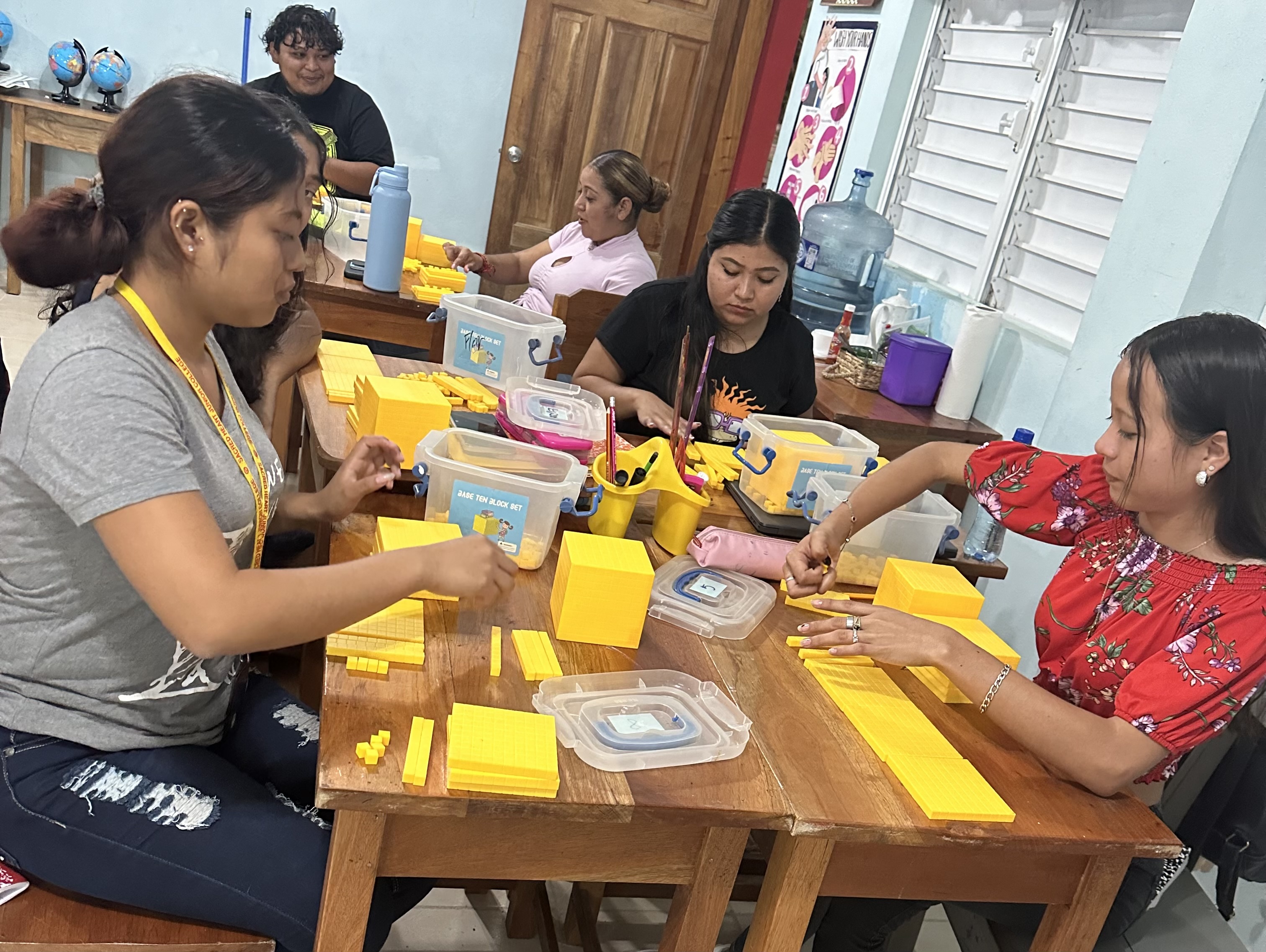
The course in the mathematics of finance has increased in importance in the accounting, business and economics fields because of the variability and high level of interest rates. The course begins with a revision of fundamental ideas in algebra which will supplement the course work. The students explore concepts in simple interest, simple discount, compound interest, and compound discount. This establishes the foundation for the major section of this course - annuities (simple and general), amortization, sinking funds, capital budget management and depreciation.
This course is designed for the student with a strong algebra and trigonometric background. It will be conducted in a format of theory, techniques, and applications of differential calculus in a combination of lectures, readings, discussions, presentation of projects, group work, modeling, and discovery. Topics to be included are: real numbers, an introduction to analytical geometry, functions, limits and continuity, derivatives and applications, the differential and anti-differentiation, and calculus of trigonometric, exponential and logarithmic functions.
This course is the second in a two semester algebra sequence at the developmental level, intended to sharpen skills and increase understanding of elementary and intermediate algebra concepts. The topics include exponents and polynomials, factoring and solving quadratic equations, linear equations and inequalities in one variable, linear equations and inequalities in two variables, and relations and functions.
This is a math course designed to help students grasp concepts about the geometry of triangles. Students will learn the about the properties of triangles, angles, and other functions within the scope of trigonometry.
This course is designed to introduce the basic ideas and methods of probability, developing the concepts of random variables, expectations and variances and looking at some simple applications and to present some basic ideas in Statistics, covering elementary aspects of data presentation and modeling, and introductory statistical inference.
This course is designed for the student with a strong algebra and trigonometric background.It will be conducted in a format of theory, techniques, and applications of differential calculus in a combination of lectures, readings, discussions, presentation ofprojects,group work,modeling, and discovery.Topics to be included are: real numbers, an introduction to analytical geometry, functions, limits and continuity, derivatives and applications, the differential and anti-differentiation, and calculus of trigonometric, exponential and logarithmic functions.
This course is a required course that examines historical events that has helped shape our nation today. This course will introduce students to the prehistoric inhabitants of Mesoamerica, the Maya Civilization leading to their collapse, early European settlements and issues they confronted. Students will examine the Atlantic slave trade in relation to Belize and the contribution it had towards Belizean Culture. This course will further provide students with a comprehensive understanding towards nationalist movement, labor movements, multi-racial consciousness and prospects of good government. The course will conclude with a highlight of present issues Belize face today in regard to the legal system, socio-political, economic and social development.
Introduction to Sociology is an introductory course that familiarizes students with the basic processes of human interaction, understand social systems and see social issues through sociological imagination. It briefly looks at the origins of culture; how culture affects the way we view the world and teaches us to appreciate cultural diversity. Different social structures serves a purpose in society and will help students understand how they are interconnected and affect their way of living in this global world.
This course examines human biology and cultural diversity. This course will include many aspects of sociology; however this course reaches more deeply into prehistory, the humanities, and the physical sciences. Students will be able to explore the primary concepts of anthropology, the four major sub-fields of anthropology: biological/physical anthropology, archaeology, cultural/social anthropology and linguistics. The course will conclude by learning how anthropology can be applied and be useful in today’s world.
It is well known that student involvement inside, and outside, of the classroom promotes greater social and academic integration, leading to a higher level of student morale and motivation, strengthening the quality of the collegiate experience. The goals of the Office of Student Services are: 1. Counsel students regarding personal, academic and career issues 2. Foster student leadership opportunities 3. Provide a safe and motivating environment conducive to student development
Hands for Life is our Student club that works to improve the community in which we all live. We do community outreach and volunteer projects. We also work with the other clubs when they do community projects. We also have quite a bit of fun with our yearly talent show!
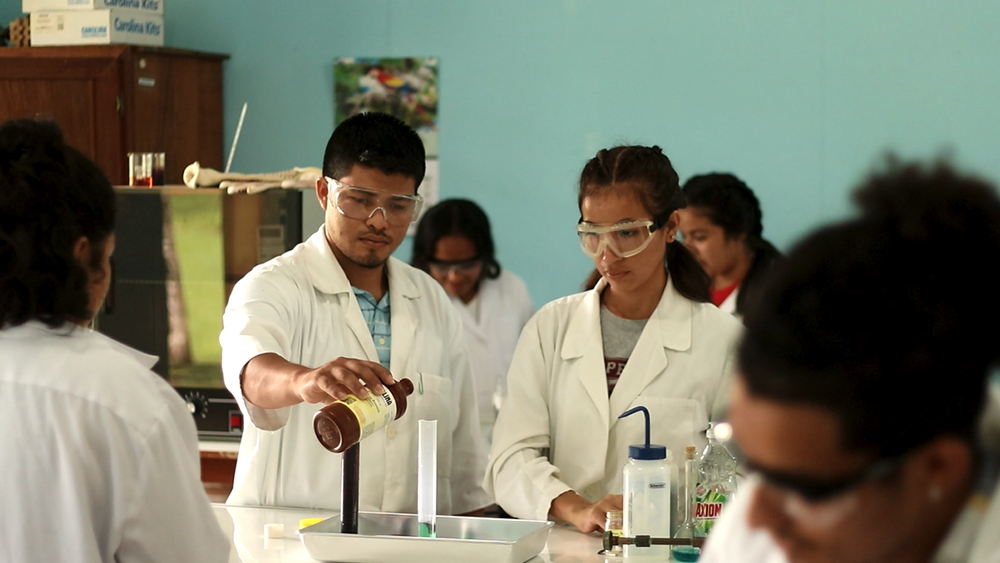
Chemistry is a fundamental science. It touches every aspect of our lives, from the air we breathe to the food that we eat. Chemistry is the science that describes matter; its properties, the changes it undergoes and the resulting energy changes. The principles you will learn in this course are the foundation of all branches of chemistry Organic (study of carbon and hydrogen compounds), Inorganic (compounds which do not contain carbon), analytical (detection and identification of substances) and biochemistry (chemistry of chemical processes in living organisms).
General Biology II is a course designed to help you greater understand the classification and taxonomy of living organisms by learning the evolutionary factors that lead to the different classifications. The purpose of this class is also explore, in detail, the many different classes of plants and animals as well as the ecosystems in which they live.
This course entails part one of human anatomy and physiology. The course is designed for those students wanting a depth of understanding in the structure and function of the human body. It first introduces students to structural levels of organization of the body as well as defines the many terms used in describing body structure, body sections, and body regions. Focus will be at both the macro and micro levels, reviewing the types of tissues (histology), integumentary system, skeletal system, muscle system, nervous system and somatic and special senses.
General Chemistry is a course that serves as an introduction to chemical principles and applications. The structure of matter at both the atomic and molecular level is discussed. This includes the principles of electron configuration, states of matter, different types of bonding and molecular geometry. In addition, chemical reactions of both gases and liquid solutions are covered including an emphasis on stoichiometric calculations. The practical portion of the course emphasizes everyday application of chemical principles with an emphasis on accurate and precise measurements as well as the proper application of the scientific method.
This course is designed to introduce students to the science of biochemistry. This course has a strong chemical emphasis, and stresses two principles 1) biological processes obey accepted “chemical” laws; and 2) successful chemical designs are used over and over in biological processes. It is geared towards making students familiar with the structure, function and synthesis of the four basic organic chemicals of life: carbohydrates, proteins, lipids and nucleic acids.Students will learn how to link structure to function for the four groups of molecules and be able to project possible consequences of structure alteration for any of these compounds.
Wilderness Survival is a professional course for Natural Resource Management, and Eco-Tourism majors that provides students with essential first aid and survival skills to improve their chances of surviving and leading a team under adverse conditions. This course includes a first aid certification with the Red Cross, and a mulit-night wilderness survival simulation experience. Students are introduced to the psycology of survival, basic wilderness skills, leadership training, orientation, and rescue.
Outdoor Recreation is a professional course for Natural Resource Management majors that examines human need for recreation, history of recreation and various recreational activities available in Belize and the Meso-American and Caribbean region. Issues related to planning, developing, and marketing of recreational resources and destinations are critically examined. Students assess environmental and cultural impacts of current management of recreational activities including community and broader stakeholder involvement.Students are be exposed to issues involving natural resource management, the business and practice of sport and leisure, and the interaction between visitors and recreational areas and facilities. This course presents a range of environmental and social aspects that must be considered in the planning and management of recreational resources.This course enables students to analyze and evaluate concepts, problems, and methods associated with recreational resources management.
Environmental Assessment is a professional course for Natural Resource Management majors that provides This course is designed to provide students with comprehensive background knowledge and field experience in the various methodologies used in environmental assessment, in particular Rapid Environmental Assessments (REA).REAs provide a snapshot of the status of a particular site including the environment and resources in an area, while also identifying potential threats to these resources. The course will help students develop basic sampling and field biology skills and provide opportunity for students to sharpen and develop observation, investigative and data collection skills. The course will provide both theoretical and practical introductions to the range of techniques used in terrestrial, aquatic and marine environments.
Protected Areas Management is a professional course for Natural Resource Management (NRM) and Eco-Tourism majors. This course provides foundational principals related to threats to the environment and the need for establishing protected areas. This course provides students with key concepts and practical guidelines for the management of protected areas. This course discusses institutional and legislative support for Belize’s protected areas and the role of NGOs. Protected Areas system design and planning is a core concept throughout this course. Research and Monitoring provides foundational skills necessary for students to undertake professional field work. Finally, this course introduces student to the role of protected areas in mitigating and buffering the effects of climate change.
Waste Management is a pathway specific course designed for Natural Resource Management (NRM) students at Sacred Heart Junior College (SHJC). This course rigorously investigates waste stream management, recovery, and general principals associated with integrated waste management. Each semester students will undertake a different practical project linked to improving waste management strategy on Sacred Heart campus and in the community. Field work is required for this course.
Terrestrial Management Issues is a professional course for Natural Resource Management majors that explores general principles of terrestrial ecology, and land use management. This course investigates land use impacts associated with agriculture, aquaculture, urbanization, forestry, tourism, and industrial development. Ecological impacts, mitigation, and challenges of deforestation, erosion, and habitat degradation are discussed.The course also surveys conservation issues with emphasis on agriculture, forest management, soils maintenance, water quality, and marine health.
Environmental Science is a professional course for science majors that provides foundational concepts related to human interaction with the earth and its systems. This course investigates historic patterns of environmental use and compares modern models of resource management, both exploitative and sustainable. This course considers the natural and built environment emphasizing environmental systems related to ecology, indoor and outdoor air quality, fresh water use, waste, renewable and non-renewable energy and modern agriculture. This course introduces students to the carbon and nitrogen cycles and other major geochemical earth systems. Global climate change and sustainability are major course themes.
Humans and the environment is a general education course that provides foundational concepts related to human interaction with the earth and its systems. This course investigates historic patterns of environmental use and compares modern models of resource management, both exploitative and sustainable. This course considers the natural and built environment emphasizing environmental systems related to ecology, indoor and outdoor air quality, fresh water use, waste, renewable and non-renewable energy and modern agriculture. This course introduces students to the carbon and nitrogen cycles and other major geochemical earth systems. Global climate change and sustainability are major course themes.